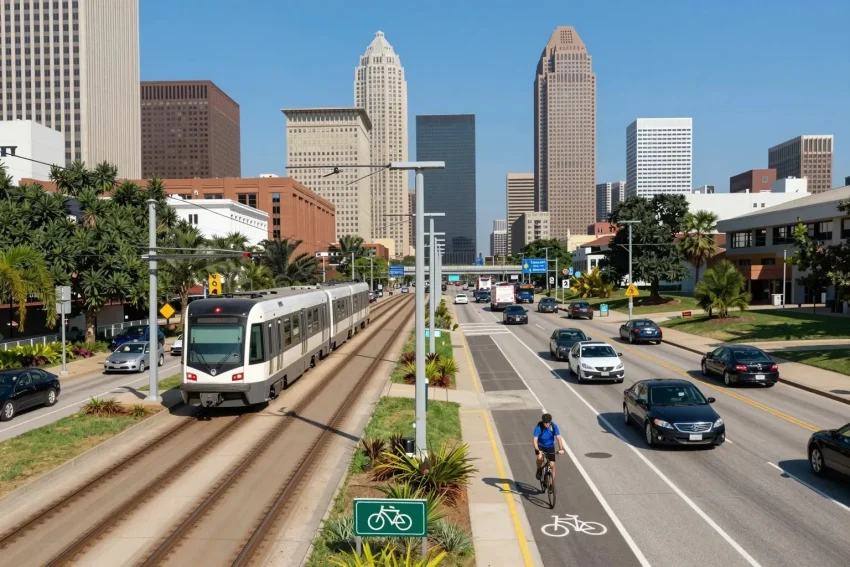
Houston, Texas, a bustling metropolis, offers a myriad of transportation options designed to cater to its diverse population and sprawling urban landscape. From public transit systems to bike lanes and highways, Houston’s transportation infrastructure is geared towards enhancing urban mobility and reducing traffic congestion.
Public Transit System
The METRO (Metropolitan Transit Authority of Harris County) is the cornerstone of Houston’s public transit system. It provides a comprehensive network of transportation options, including buses, light rail, and commuter services, to efficiently serve the city’s residents and visitors.
METRORail
The METRORail is Houston’s light rail system, which plays a critical role in urban mobility. It currently consists of three lines: the Red Line, Green Line, and Purple Line. These lines connect key destinations such as downtown Houston, the Texas Medical Center, and various cultural and entertainment districts. The METRORail is not only a convenient mode of transport but also helps alleviate traffic congestion by offering a reliable alternative to driving.
Bus System
Complementing the light rail, Houston’s bus system is extensive, with numerous routes covering the entire city and its suburbs. The bus network is designed to provide efficient and accessible commuter services for daily travel needs. Many buses are equipped with bike racks, encouraging multi-modal transportation for cyclists.
Park and Ride
For those living in the suburbs, the Park and Ride service offers a practical solution for commuting into the city. Commuters can park their vehicles at designated lots and take express buses to various urban centers, reducing the number of cars on highways and easing traffic congestion.
Rideshare and Taxi Services
Rideshare services like Uber and Lyft, along with traditional taxi services, provide flexible and convenient transportation options throughout Houston. These services are particularly useful for last-mile connectivity, ensuring that residents and visitors can navigate the city efficiently even when public transit is not a viable option.
Houston Airports
Houston is home to two major airports: George Bush Intercontinental Airport (IAH) and William P. Hobby Airport (HOU). Both airports are well-connected to the city through various transportation options, including shuttles, taxis, car rentals, and METRO services, facilitating easy access for travelers.
Biking and Bike Lanes
In recent years, Houston has made significant efforts to promote cycling as a sustainable and healthy mode of transport. The city has developed an extensive network of bike lanes and trails, encouraging residents to choose biking as an alternative to driving. This initiative not only supports urban mobility but also contributes to reducing traffic congestion and environmental impact.
Highways and HOV Lanes
Houston’s highway system is one of the most expansive in the United States, with major interstates such as I-10, I-45, and I-69 intersecting the city. To facilitate faster travel and reduce congestion, many highways feature HOV lanes (High Occupancy Vehicle lanes), which are reserved for vehicles with multiple passengers, encouraging carpooling and rideshare options.
Car Rentals
Car rentals are readily available in Houston, providing an ideal solution for visitors who prefer the flexibility of having their own vehicle. Major rental companies operate at both airports and throughout the city, offering a wide range of vehicles to suit different needs.
Transportation Infrastructure and Urban Mobility
The city of Houston continues to invest in its transportation infrastructure to improve urban mobility and address the challenges of a growing population. From expanding public transit options to enhancing bike lanes and developing innovative traffic management solutions, Houston is committed to creating a more efficient and sustainable transportation network.