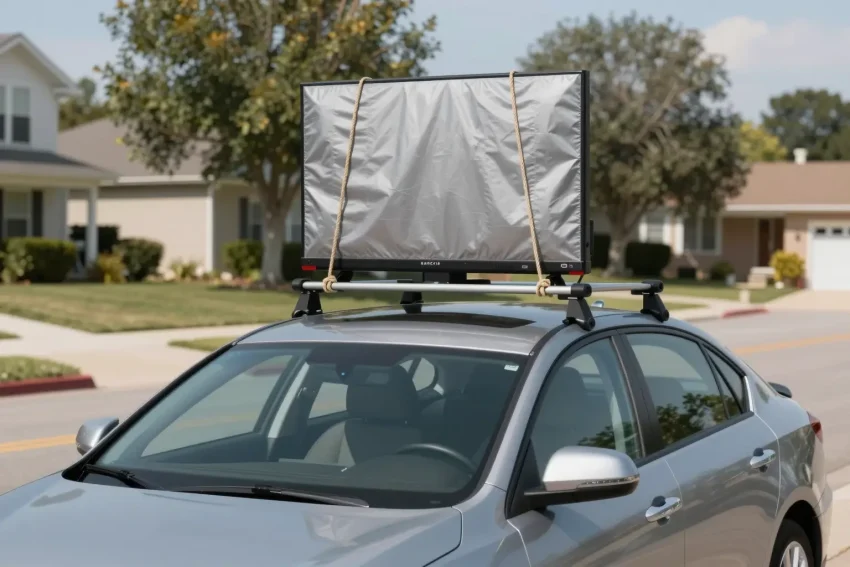
Transporting large items like a TV can be a challenging task, especially when it involves securing it on the roof of your vehicle. In this article, we will explore the essential considerations, safety guidelines, and legal requirements for transporting a TV over your car. Utilizing proper techniques and equipment will ensure safety and prevent damage to your belongings and your vehicle.
Understanding the Challenges of Transporting a TV
When transporting a TV, there are several challenges you need to be aware of:
- Dimensions: TVs can be bulky and have awkward shapes, making them difficult to secure.
- Weight Distribution: Poor weight distribution can lead to instability and safety hazards.
- Visibility: A large item can obstruct your view, affecting your driving.
- Protection: TVs are fragile and require careful handling to prevent damage.
Essential Equipment for Safe Transportation
Having the right equipment is crucial for safely transporting a TV on your car roof. Here’s what you need:
- Roof Rack: Ensure your vehicle has a sturdy roof rack to support the load.
- Straps: Use heavy-duty straps to securely fasten the TV to the roof rack.
- Padding: Use padding between the TV and the roof to prevent scratches and damage.
Step-by-Step Guidelines for Securing Your TV
- Measure the TV and Roof Space: Before attempting to load the TV, measure both the TV and your car roof to ensure they fit properly.
- Check the Weight Limit: Refer to your vehicle’s manual to determine the maximum weight your roof can handle.
- Properly Position the TV: Place the TV in the center of the roof to maintain balance and stability.
- Use Padding: Place padding beneath the TV to protect both the TV and the car roof.
- Secure with Straps: Use high-quality straps to tightly secure the TV, ensuring it doesn’t move during travel.
- Check Visibility: Ensure the TV does not obstruct your view from any angle.
Legal Requirements and Safety Regulations
Before transporting a TV on your car roof, familiarize yourself with the legal requirements and safety regulations:
- Load Regulations: Different regions have specific regulations regarding load size and securing methods. Check local laws to comply with these requirements.
- Highway Guidelines: Ensure your load does not exceed highway restrictions for size and weight.
- Legal Requirements: Some areas may require additional permits or documentation for transporting large items.
Tips for Safe and Cautious Travel
Follow these tips to ensure a safe journey while transporting your TV:
- Drive Cautiously: Reduce speed, especially on highways, to maintain control over the vehicle.
- Avoid Sudden Maneuvers: Sudden stops or sharp turns can destabilize the load.
- Regularly Check the Load: Stop periodically to ensure the TV remains securely fastened.
Damage Prevention and Protection
Preventing damage to your TV and vehicle is crucial:
- Use Proper Padding: Adequate padding prevents scratches and absorbs shocks during travel.
- Securely Fasten the Load: Double-check all straps and fastenings before starting your journey.
Transporting a TV over your car roof requires careful planning and adherence to safety guidelines. By using the right equipment, following legal regulations, and taking necessary precautions, you can ensure a safe and incident-free journey. Always prioritize safety and protection for both your vehicle and your belongings.